Job Aids and Performance Support
Effective learning doesn't end when a course is marked complete. To drive sustained behavior change and support employees at the moment of need, I design tailored performance support assets—from tactical front-line job aids to reflective leadership workbooks. The examples below are created primarily in Adobe InDesign, but you don’t need fancy tools to provide helpful resources to employees—Google Docs can be great too. What’s important is that these resources provide structured and scannable guidance that integrates seamlessly into day-to-day workflows.
This reference guide was designed to support thoughtful workplace dialogue. Rather than simply cataloging outdated or culturally insensitive idioms (such as corporate slang borrowed from marginalized groups), the asset breaks down why phrases carry unintended impact and provides modern, inclusive alternatives.
I made this companion job aid for the Moving Toward Conscious Inclusion course, synthesizing complex cognitive biases into digestible definitions, workplace triggers, and proactive reflection prompts.
I made this digital, fillable reflection workbook designed to transition managers from passive course consumption into hands-on behavioral practice. The workbook guides leaders through personal management-style reflection, establishes psychological safety around receiving critical input, and provides step-by-step technical instructions for initiating feedback requests within Workday.
Facilitator and Session Guides
High-impact instructor-led training (ILT/VILT) requires more than great presentation slides. It demands intentional facilitation instruction, especially when the person delivering the training isn’t the one who created it. I design comprehensive facilitator guides that equip trainers, subject matter experts, and guest speakers to guide discussions seamlessly. Each guide maps out precise timing, key discussion prompts, technical logistics, and detailed activity choreography so the learning experience remains consistent, engaging, and outcome-driven across every cohort.
Background
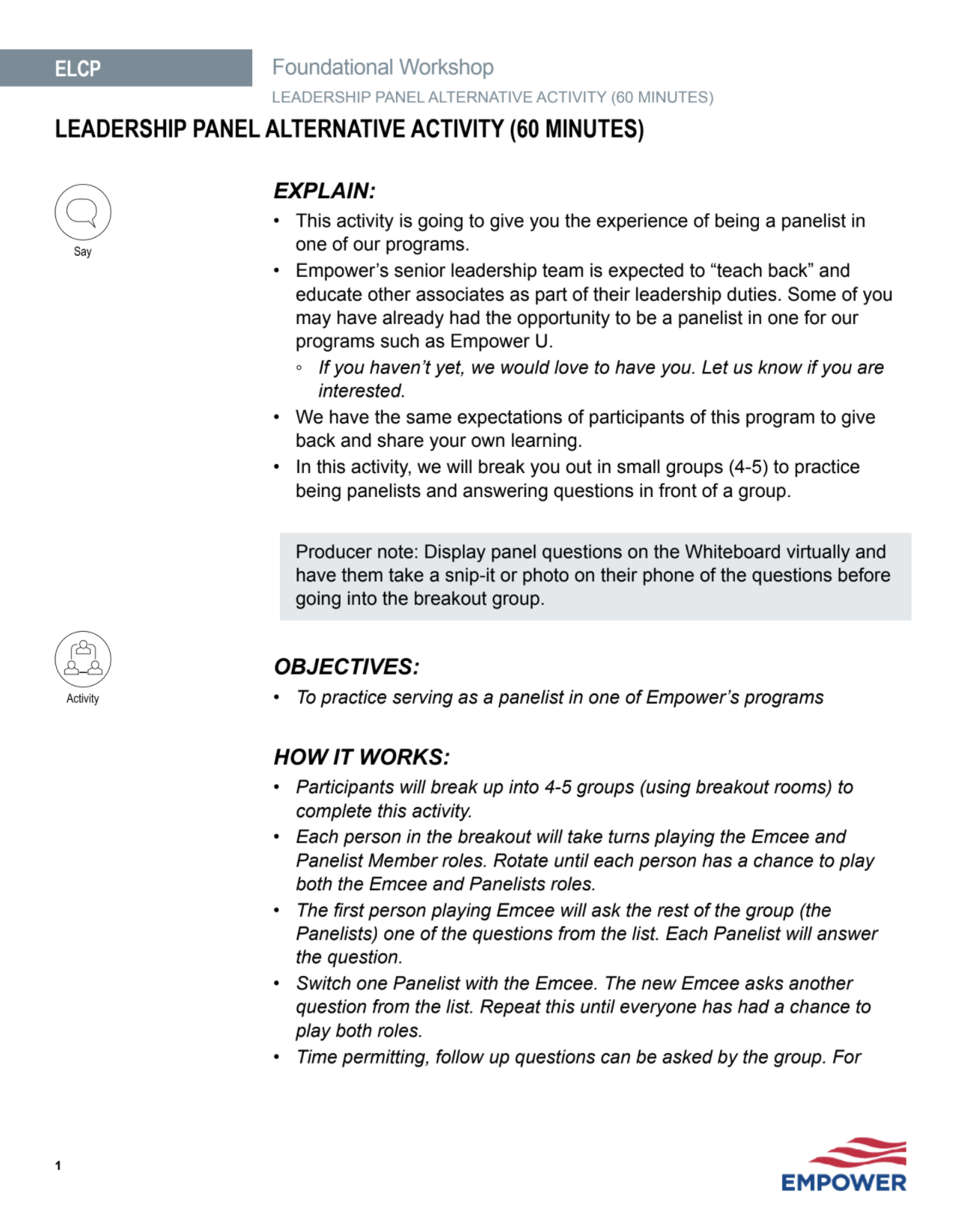
As part of the Empower Leadership Program created by my team, executive stakeholders wanted emerging and new leaders to build comfort participating in high-visibility public forums. Many had never served on a formal panel, navigated impromptu questioning, or moderated an executive session.
Facilitation
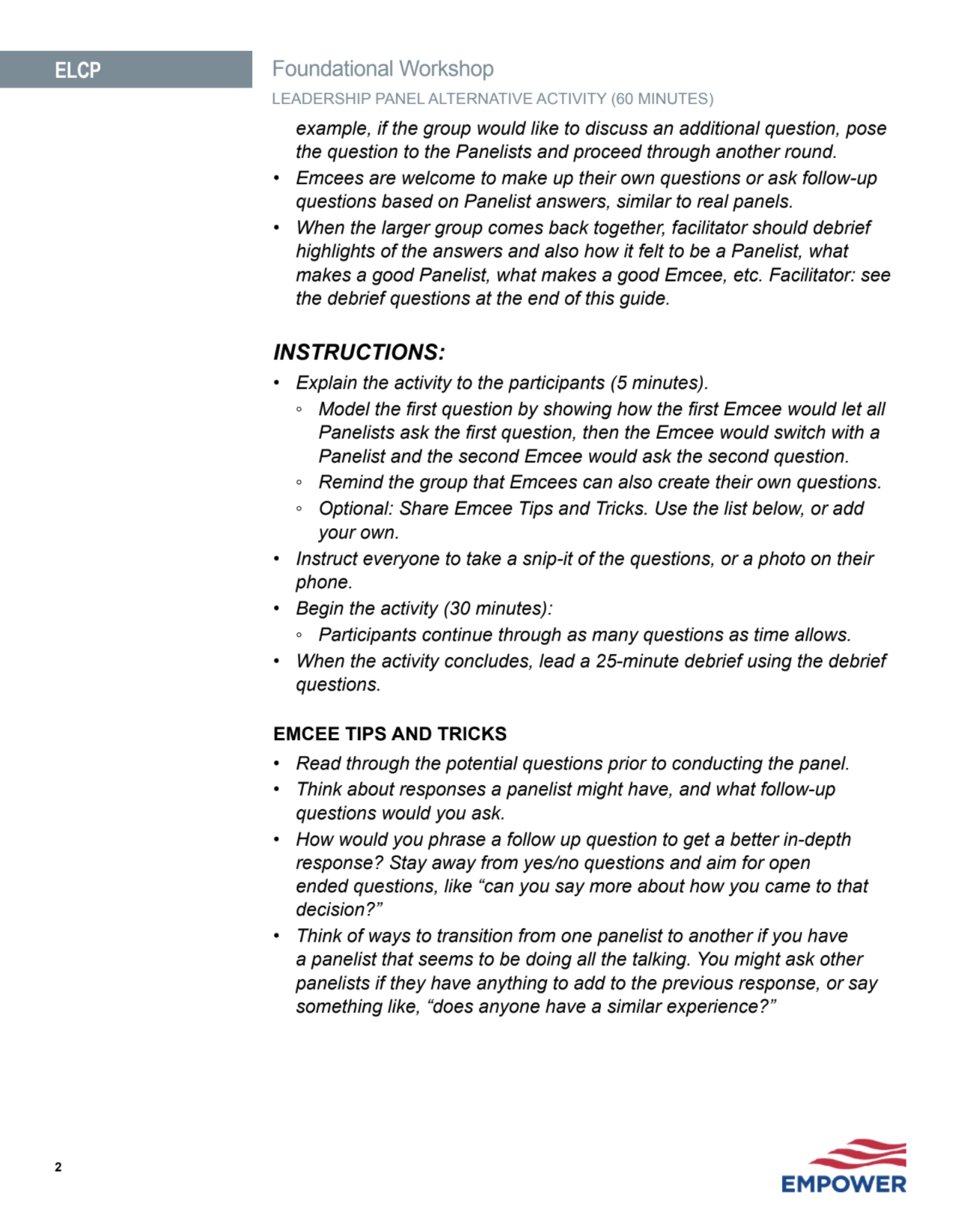
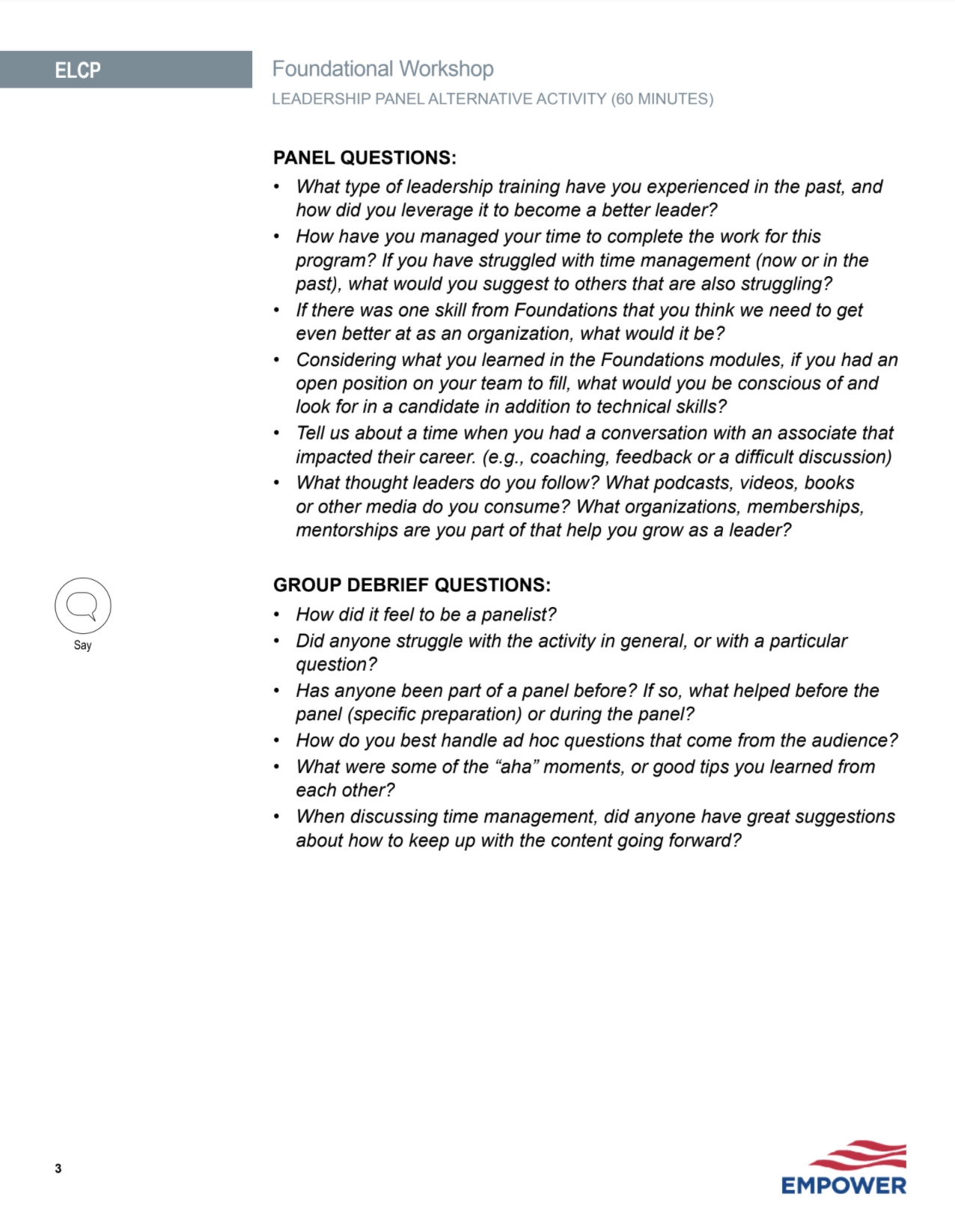
Cohort members alternated between serving as featured panelists (practicing concise storytelling and fielding unexpected audience prompts) and acting as session emcees (learning how to frame discussions, manage time, and navigate panel dynamics).
To ensure any instructor or guest facilitator could run the workshop flawlessly, the guide detailed:
Precise time-boxing for each round of questions and transitions.
Facilitator staging instructions and room/breakout configuration.
Real-time debrief questions and coaching rubrics to help peers deliver constructive, immediate feedback.